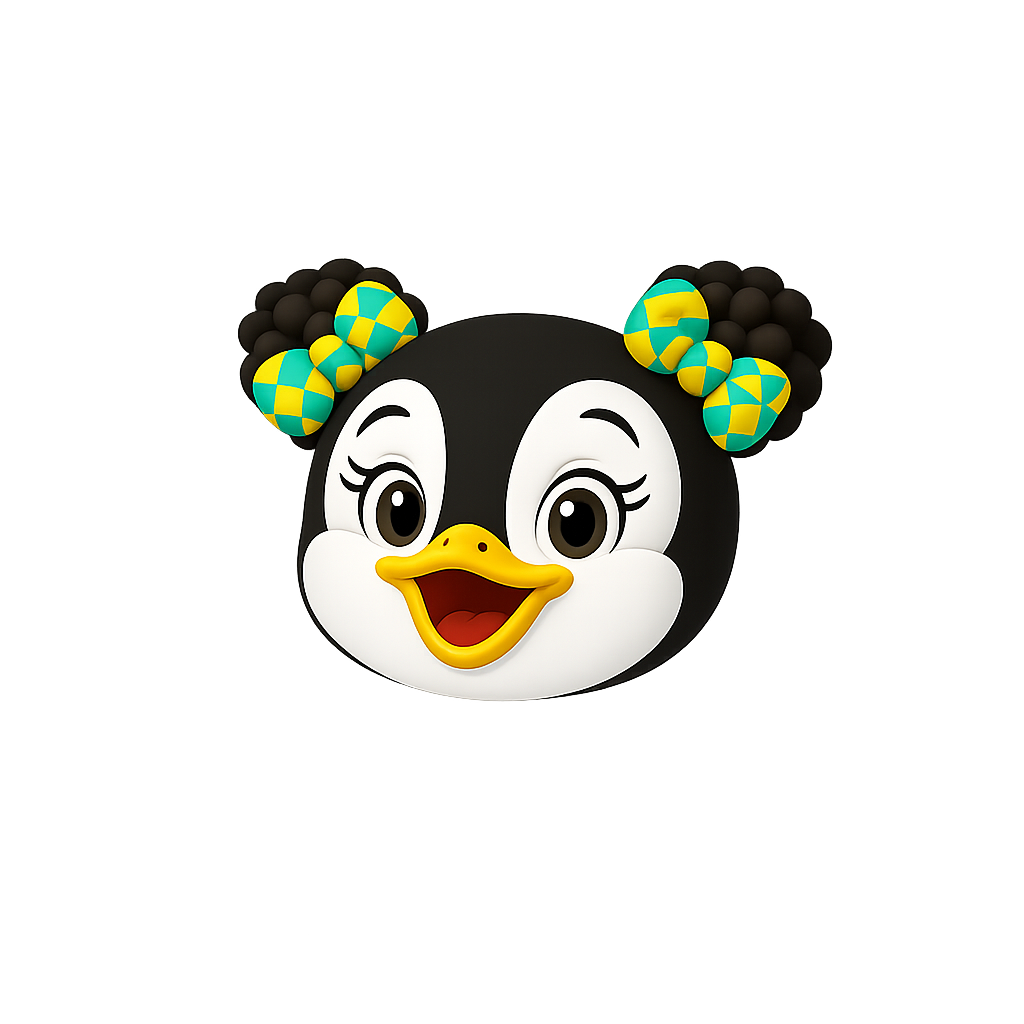
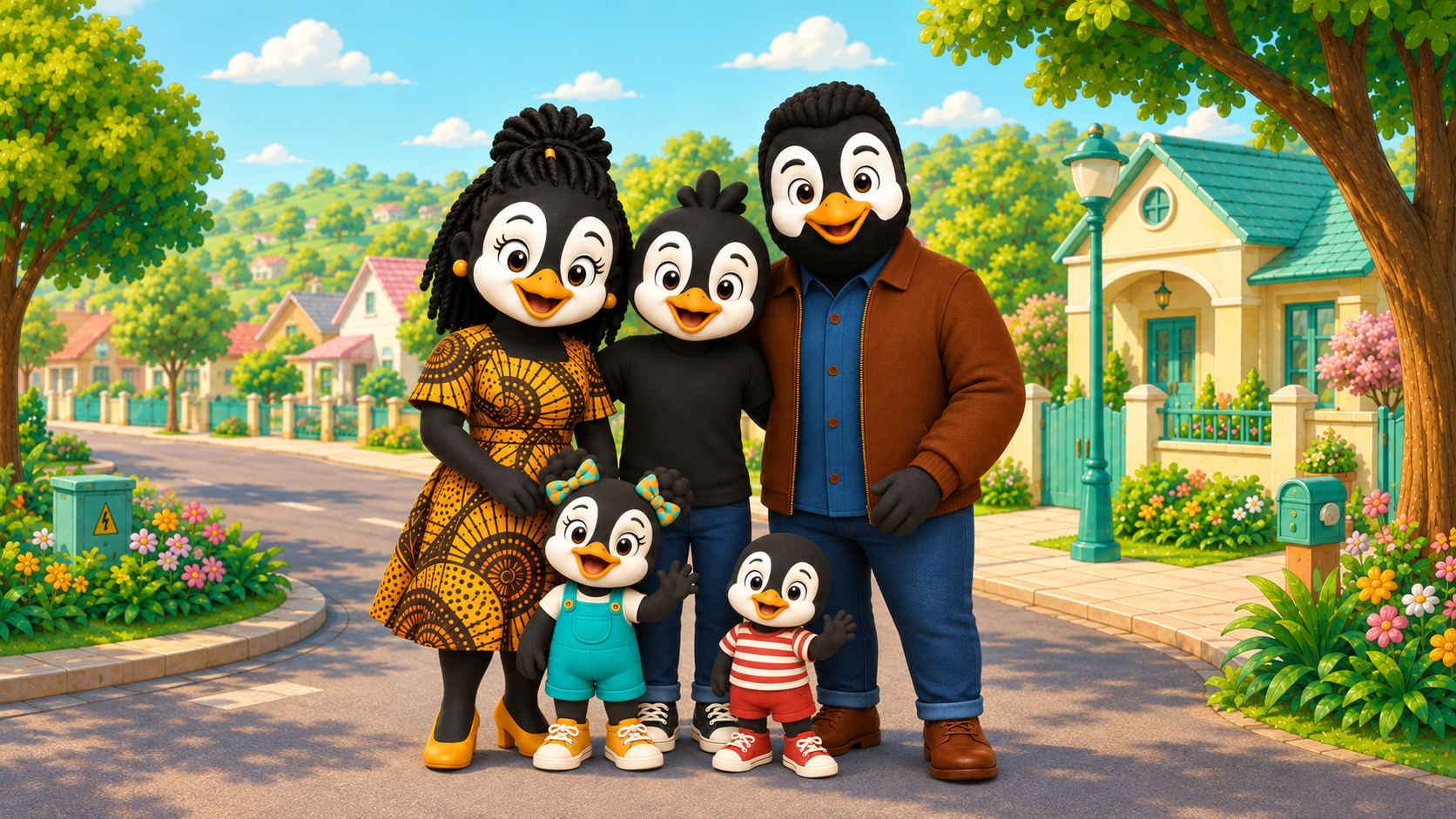
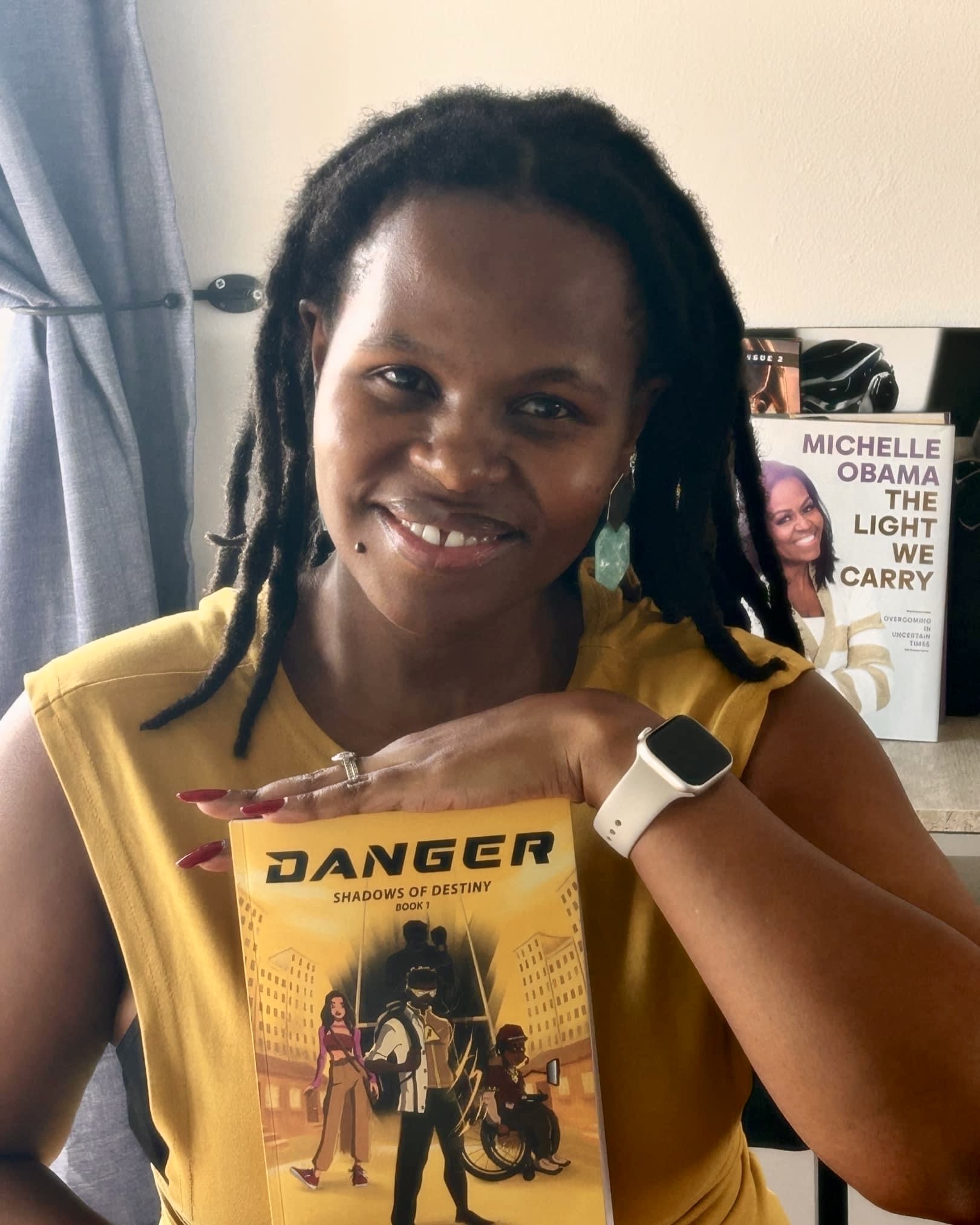
My name is Mvokazi Ncede. As a mom of three boys, I often joke that Anda Penguin is the daughter my husband and I never had. To me, she is my fourth child. That is how close she is to my heart.
I grew up among the lush, rolling hills of Mngcangcathelweni, a village in Nqamakwe in the former Transkei. My childhood was rooted in isiXhosa language, culture and community, with very little Western influence.
Everything changed when I was twelve. My father got a promotion and our family moved to the suburbs of East London. I went from a rural village school to a multiracial school where English was the main language of learning. I could not speak or understand a word of English.
It was a difficult adjustment. I had to learn a new language, adapt to a different culture and keep up with a new curriculum and pace of learning, all while dealing with the changes that come with being twelve years old.
Years later, I watched my own children grow up in English-medium schools. Slowly, English became the language we spoke at home too. It was not a decision we made deliberately. It happened gradually, as language shifts often do.
That experience made me think about how easily children can lose everyday access to their home language, even when their parents love and value it. I also understood how difficult it can be for an isiXhosa-speaking child to enter an English-medium learning environment without enough support.
That is why I created Anda Penguin.
Anda Penguin began as a way to help babies and young children hear, learn and enjoy isiXhosa through characters, stories, songs and educational resources that feel familiar to them. As the platform developed, its purpose grew.
Our resources connect isiXhosa words with their English meanings. Children hear the isiXhosa word, learn its English meaning and then hear the isiXhosa word again. This allows learning to happen in both directions. English-speaking children can learn isiXhosa, while isiXhosa-speaking children can build the foundational English vocabulary they need for school and everyday communication. Children who already understand both languages can practise moving between them.
Today, Anda Penguin is growing into a bilingual early-learning platform for children, parents and educators. Through educational videos, interactive play cards, workbooks, stories and learning activities, we support home-language development, foundational English vocabulary and school readiness.
Our long-term goal is to build structured learning pathways that take children from individual words to sentences, phonics, reading and comprehension. We want children to gain confidence in English while maintaining a strong connection to isiXhosa.
We provide a mix of freely available content, affordable membership options and paid educational resources. Membership support allows us to continue creating new material and growing the platform. With support from corporate partners, funders and educational organisations, we also want to extend access to families, schools and communities that may not be able to pay for these resources themselves.
Anda Penguin supports:
- Early childhood language development
- Foundational isiXhosa and English vocabulary
- Multilingual learning
- School readiness
- The continued use of isiXhosa
- Access to educational resources for underserved children
- Parents participating in learning at home
For us, this work is about building a sustainable language-learning platform that gives children a stronger start while keeping isiXhosa present in their homes, education and everyday lives.
If you’d like to partner with Anda Penguin to bring more learning resources to children, schools and communities, email us at molo@andapenguin.co.za.